Dog Mom Rhinestone Design
First Impressions: Charm with Clear Intent
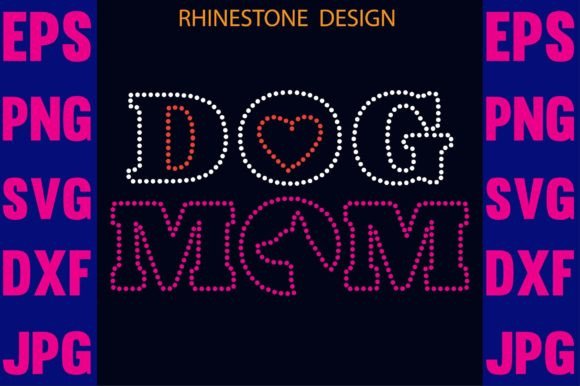
When I opened the Dog Mom Rhinestone Design, what struck me wasn’t just the glitter—it was how immediately readable it felt. The layout leans into playful warmth without tipping into clutter: a stylized paw print anchors the left, “Dog Mom” curves confidently across the center in a friendly, slightly rounded script, and a single rhinestone cluster (likely intended for hot-fix or machine-applied stones) sits just above the “o.” It’s not overly detailed—no tiny bones, no collars, no paw prints trailing off—but that’s its strength. This isn’t a design trying to be everything; it’s a confident, scalable statement. As an embroidery designer who’s stitched hundreds of pet-themed pieces, I knew right away this would land best on relaxed, everyday items—not delicate heirlooms, but things people reach for daily: a canvas tote for dog park runs, a cozy sweatshirt for weekend walks, or a tea towel hanging in a sunlit kitchen.
Where It Shines: Real Projects, Real Reactions
Last week, I prepped a small-batch run of cotton canvas tote bags for a local pet boutique. I chose the Dog Mom Rhinestone Design as the focal point—centered on the front panel, sized to 3.8 inches wide. Using a medium-weight cutaway stabilizer and 40-weight polyester thread, the satin-stitched lettering held crisp edges, and the paw outline stayed smooth and defined. Customers responded instantly—not just with smiles, but with recognition. One woman paused mid-shop, pointed, and said, “That’s *me*.” That kind of emotional resonance is gold for Etsy sellers and small shop owners. It works just as well on midweight cotton sweatshirts (where the rhinestone element reads as subtle sparkle, not bling), baby onesies (scaled down to 2.5 inches with reduced stitch density), and even pillow covers—especially when paired with coordinating solid-color linen.
I also tested it on a batch of unbleached tea towels for a holiday craft fair. Here, the design’s clean silhouette made mockup prep easy: I dropped the PNG into my digital preview tool against both light and dark fabric swatches, and it held up beautifully in every variation. For craft business owners building printable mockups or digital product previews, that versatility saves real time.
Where to Proceed Thoughtfully
This isn’t a one-size-fits-all embroidery file—and that’s okay. Its charm relies on balance, so context matters. On thin or highly textured fabrics (like slubbed linen or loosely woven chambray), I recommend reinforcing with tear-away *under* the stabilizer to prevent puckering around the curved script. Stretchy knits? Use a light fusible + cutaway combo and reduce top tension slightly—the satin stitch can pull if the fabric gives too much. And while the rhinestone cluster looks elegant in the SVG preview, remember: actual rhinestone application requires precise heat settings and pressure. If you’re planning hot-fix stones, test placement on scrap first—some clusters shift if hooped too tightly.
Avoid using the full-size version on curved surfaces like structured caps unless you’ve confirmed the design fits within your cap frame’s active stitching area. The “Mom” curve flows well on flat panels, but compression on a dome can distort legibility. Also, skip dense fill-stitch backgrounds behind the text—this design breathes best with negative space. Overloading it defeats its friendly, approachable personality.
Design Notes Every Embroidery Professional Should Check
- Test on scrap fabric first—especially if pairing with dark thread on light fabric or vice versa. Contrast affects perceived clarity more than you’d expect.
- Review stitch density before scaling up. The original file may have optimized density for standard sizes; enlarging beyond 4.5 inches could require manual adjustment to avoid thread buildup.
- Confirm hoop size compatibility—the design’s width and height should comfortably fit within your most-used hoop, with at least ¼ inch margin.
- Inspect small details in your embroidery software: check corner radii on the paw, spacing between letters, and whether the rhinestone placement aligns cleanly with the curve.
- Mock it in black and white—a grayscale preview reveals legibility issues hidden by color.
- Compare light/dark fabric backgrounds in your design software. Some scripts fade visually on busy textures—even if technically stitched fine.
- Use proper stabilizer for your fabric type—not just “any cutaway,” but one matched to weight and drape.
- Verify licensing terms before selling finished items commercially or bundling the file with other digital products. Since it’s listed under Graphics and Crafts, confirm whether resale of physical goods is permitted.
How It Elevates Your Finished Product
The Dog Mom Rhinestone Design doesn’t shout—it invites. That makes it unusually effective for personalized gifts and boutique branding. When stitched cleanly on a high-quality cotton apron, it feels intentional, not generic. On a nursery blanket, it adds quiet sentiment without overwhelming the softness of the piece. For Etsy sellers, that translates directly to higher perceived value and stronger buyer engagement: customers don’t just see a design—they see themselves reflected in something handmade, thoughtful, and well-executed.
It also supports brand consistency. Because it’s delivered in EPS, SVG, DXF, PNG, and JPG, you can adapt it seamlessly—not just for machine embroidery, but for vinyl cutting (tote bags, stickers), screen printing (small-run tees), or even sublimation (mugs, pillows). That cross-format flexibility is rare in single-purpose graphics, and it lets creative entrepreneurs stretch one design asset across multiple revenue streams without losing quality.
Final Thought: A Design That Works With You
As someone who’s rejected dozens of “cute” pet designs for being too fussy, too dated, or too fragile in stitch execution, I appreciate how the Dog Mom Rhinestone Design trusts the maker. It doesn’t over-promise. It gives you room to interpret—whether you choose matte thread for a minimalist look or add a single row of clear stones for subtle glam. It respects the craft. And in a market flooded with fast, forgettable digital embroidery files, that kind of thoughtful restraint is exactly what helps a handmade product stand out—and stay beloved.