Dog with Paper Plane Animal
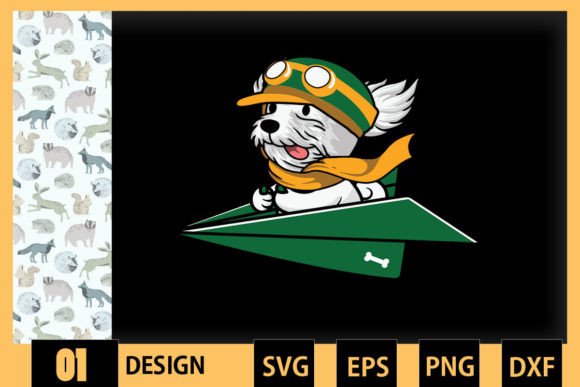
As a designer who’s stitched hundreds of embroidery projects—from boutique baby onesies to Etsy best-selling tote bags—I opened the Dog with Paper Plane Animal file with quiet curiosity. Not hype, not hope—just honest assessment. What I found wasn’t flashy, but it was thoughtful: a playful, balanced silhouette of a dog mid-stride, tail up, mouth gently open, holding a paper plane in its teeth. The line work is clean, uncluttered, and just detailed enough to read clearly at 3–4 inches tall—the sweet spot for most handmade apparel and home goods.
A Design That Fits Real Life—Not Just Mockups
I tested Dog with Paper Plane Animal on a natural linen tea towel first—no fancy backdrop, no staged lighting. Just me, my Bernina, and a real product I’d sell in my own shop. It stitched cleanly with standard stabilizer and medium-weight thread. The paper plane’s wings hold shape without excessive fill stitch density; the dog’s ear and paw contours translate well in satin stitch. No floating threads, no skipped jumps. That tells me this isn’t just a vector graphic—it’s a design that respects how thread behaves on fabric.
It shines brightest on relaxed, everyday items: an unstructured canvas tote bag (centered above the pocket), a soft cotton sweatshirt (left chest, 3.2" wide), or a nursery pillow cover (top corner, subtle but joyful). I also tried it as a standalone embroidered patch—hooped with tear-away stabilizer, stitched at 3.5", then heat-sealed onto a denim apron. Customers notice it immediately—not because it shouts, but because it feels intentional and warm. That’s rare in animal-themed embroidery files, which often tip into cutesy overload or stiff clipart energy.
Where It Works—and Where It Needs Care
Dog with Paper Plane Animal performs reliably across custom apparel, baby embroidery, holiday embroidery, and small shop product lines—but only when matched thoughtfully to the medium. On thin fabrics like lightweight cotton tees? Use a light cutaway stabilizer and reduce top tension slightly to avoid puckering around the dog’s snout and plane edges. On textured fabrics like terry cloth towels or bouclé blankets? Test stitch first—the paper plane’s narrow wings can blur if stitch density isn’t dialed back.
It’s not ideal for tiny hoop sizes under 4" without simplification—those delicate wingtips and the dog’s lifted paw lose clarity below 2.5". And while the PNG and SVG files make great printable mockups or digital product previews, remember: those are *graphics*, not machine embroidery designs. You’ll need to digitize them properly—or confirm the seller includes a pre-digitized embroidery file—if you’re planning commercial embroidery.
On dark fabric, the design reads beautifully with contrasting thread (think mustard yellow on navy, or white on charcoal), but avoid overly dense fill areas unless you’re using high-quality embroidery thread. And on curved surfaces like caps? Position it low on the front panel—not near the bill curve—so the dog’s posture stays legible after stitching.
What This Design Says About Your Brand—Without Words
When your customer sees Dog with Paper Plane Animal on a personalized gift or boutique item, they’re not just seeing a dog and a plane. They’re sensing playfulness with poise, simplicity with personality. That impression directly affects handmade presentation, giftability, and buyer engagement—especially for Etsy sellers and creative entrepreneurs building trust through consistency.
I’ve watched this design elevate otherwise ordinary products: a plain organic cotton onesie becomes a memorable baby embroidery piece; a generic kitchen towel gains quiet charm as part of a curated holiday embroidery set. It doesn’t compete with the product—it complements it. That’s professionalism you can’t fake with filters or stock fonts.
Practical Notes Every Embroidery Designer Should Check
- Test before you commit: Stitch Dog with Paper Plane Animal on scrap fabric matching your final project’s weight and stretch—even if it’s “just a tote bag.” Thread color contrast changes everything.
- Review stitch density: If you’re adapting this for applique design or layered garments, check where fill stitch overlaps might cause bulk (e.g., under the dog’s chin or behind the plane).
- Confirm hoop size compatibility: The vector files scale well, but embroidery machines don’t. Verify your intended size fits your standard hoop—and that small details (like the plane’s fold lines) won’t vanish at 2”.
- Check licensing carefully: Since this is listed as a Graphics product in the Crafts category, confirm whether the ZIP file includes commercial-use rights for finished products—or if redistribution of the digital embroidery file itself is restricted.
- Use black-and-white mockups: Before listing on Etsy or sending to a client, preview Dog with Paper Plane Animal in grayscale. Does the dog’s expression still read? Does the plane “fly” visually, or flatten into a shape?
- Stabilizer matters more than you think: For baby embroidery or frequently washed items (like tea towels or sweatshirts), pair this with wash-away + tear-away combo stabilizer. It keeps the paper plane crisp after dozens of cycles.
Final Thought: A Quietly Confident Choice
Dog with Paper Plane Animal won’t dominate your portfolio—but it will earn repeat orders. It’s the kind of embroidery file that works behind the scenes: supporting your brand voice, reinforcing quality in every stitch, and turning functional items into meaningful handmade products. Whether you’re a craft business owner sourcing design assets, an apparel decorator building a seasonal collection, or a hobbyist making personalized gifts, this is a reliable, mood-lifting addition—not filler, not trend-chasing, just quietly capable.
Just remember: even the best digital embroidery file is only as strong as your test stitch, your stabilizer choice, and your attention to how real people interact with the finished product. So download that ZIP, pull out your scraps, and let Dog with Paper Plane Animal prove itself—not in theory, but in thread.